
Spasht Swar (Clear Speech)
Overview
Spasht Swar is a digital speech therapy platform created to make articulation improvement accessible, engaging, and culturally relevant for Hindi-speaking children.
It combines AI-powered misarticulation detection, therapist-guided programs, and gamified learning to help children practice and master correct pronunciation, whether at home, in school, or in remote areas.
My contribution
Product strategy User research Product design
Team
6 members 1 × designer (me) 6 × developers
Timeline
August 2023 - October 2023

Problem
Misarticulation is one of the most common speech issues in children, and Hindi with its complex consonant clusters, retroflex sounds, and aspirated phonemes poses additional challenges.
For many children, consistent therapy is difficult due to:
- Linguistic complexity of Hindi, making accurate pronunciation harder to master.
- Limited access to trained speech therapists in smaller towns and rural areas.
- Difficulty engaging young children in sustained, effective practice.
Spasht Swar addresses these gaps by bringing structured, play-based, and culturally aligned speech therapy to every child’s fingertips.
Goal
- Make Hindi speech therapy accessible to children regardless of location.
- Use play-based, interactive methods to keep children engaged.
- Provide clear guidance for parents to support at-home practice.
- Track progress and adapt exercises to each child’s needs.
Design Process
Empathize
Research Approach
Secondary Research
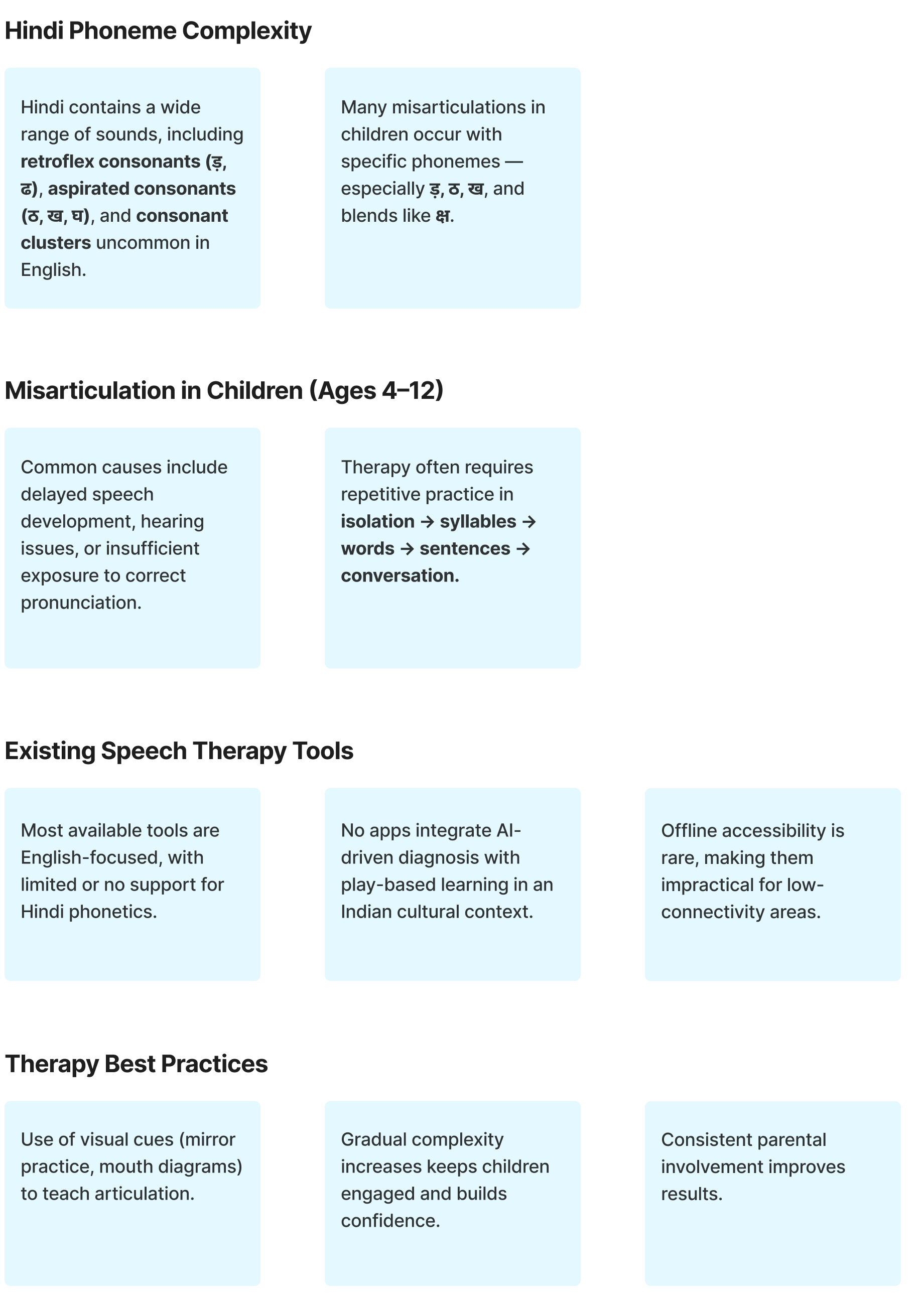
Before speaking to users, we explored the domain to understand the problem landscape. This helped us identify where current solutions fall short and what cultural and linguistic nuances must be addressed.
Key Findings
Primary Research
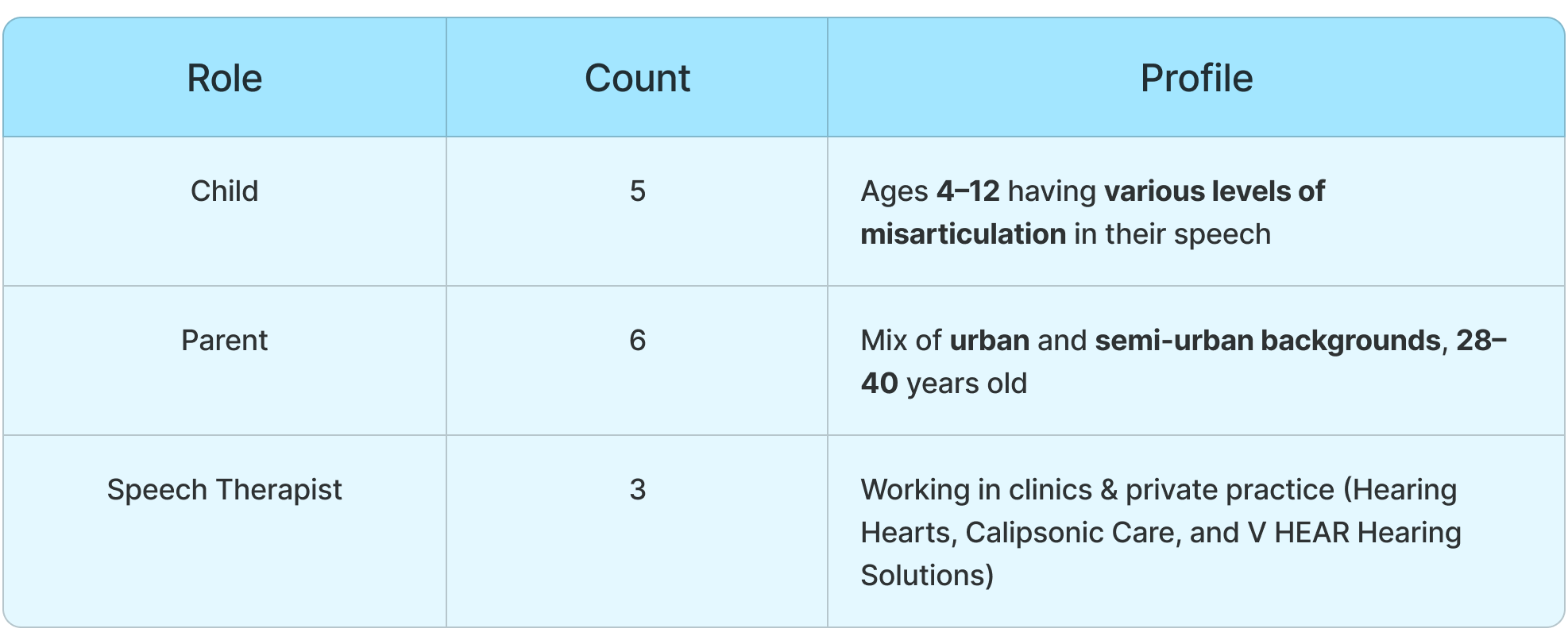
To ground our design in real-world needs, we conducted interviews and observation sessions with the three main stakeholder groups — children, parents, and speech therapists.
This helped us understand not just functional requirements but also behavioral patterns and emotional needs.
Methods Used:
- Semi-structured Interviews (in-person and virtual)
- Observation of therapy sessions (with therapist consent)
- Contextual inquiry (seeing how children interact with digital tools)
Insights
🧑🤝🧑 Parents
"I want to help my child practice, but I’m never sure if I’m doing it right."
- Want consistent visibility into their child’s progress but find existing reports too technical.
- Value flexible practice schedules that fit around school and home life.
- Often feel uncertain about how to reinforce correct pronunciation at home without guidance.
👶🏻 Children
"I like it when the game tells me ‘Good job!’ then I want to do more."
- Engage longer with story-based and visual activities compared to repetitive drills.
- Feel proud when progress is visually acknowledged (e.g., stars, badges).
Sometimes get shy or anxious when practicing in front of others, preferring a private, playful setting.
🥼 Therapists
"If children don’t practice at home, we lose half the progress by the next session."
- Need tools to remotely monitor and adjust therapy plans in real time.
- Prefer structured data (phoneme accuracy, repetition counts) over general progress notes.
- Want a way to keep children engaged between sessions to avoid regression.
Analysis & Opportunity
Synthesizing insights from both secondary and primary research, three major opportunity areas emerged:
- Culturally Aligned Learning
Hindi articulation therapy must address phoneme complexity while matching familiar cues — stories, rhymes, and visuals children already connect with. - Continuous, Guided Practice
Engagement between therapy sessions is essential. Parents and children need structured, easy-to-follow activities with clear feedback to maintain progress. - Collaborative Progress Tracking
A shared platform where therapists, parents, and children can monitor progress fosters trust, accountability, and consistency.
Empathize → Define
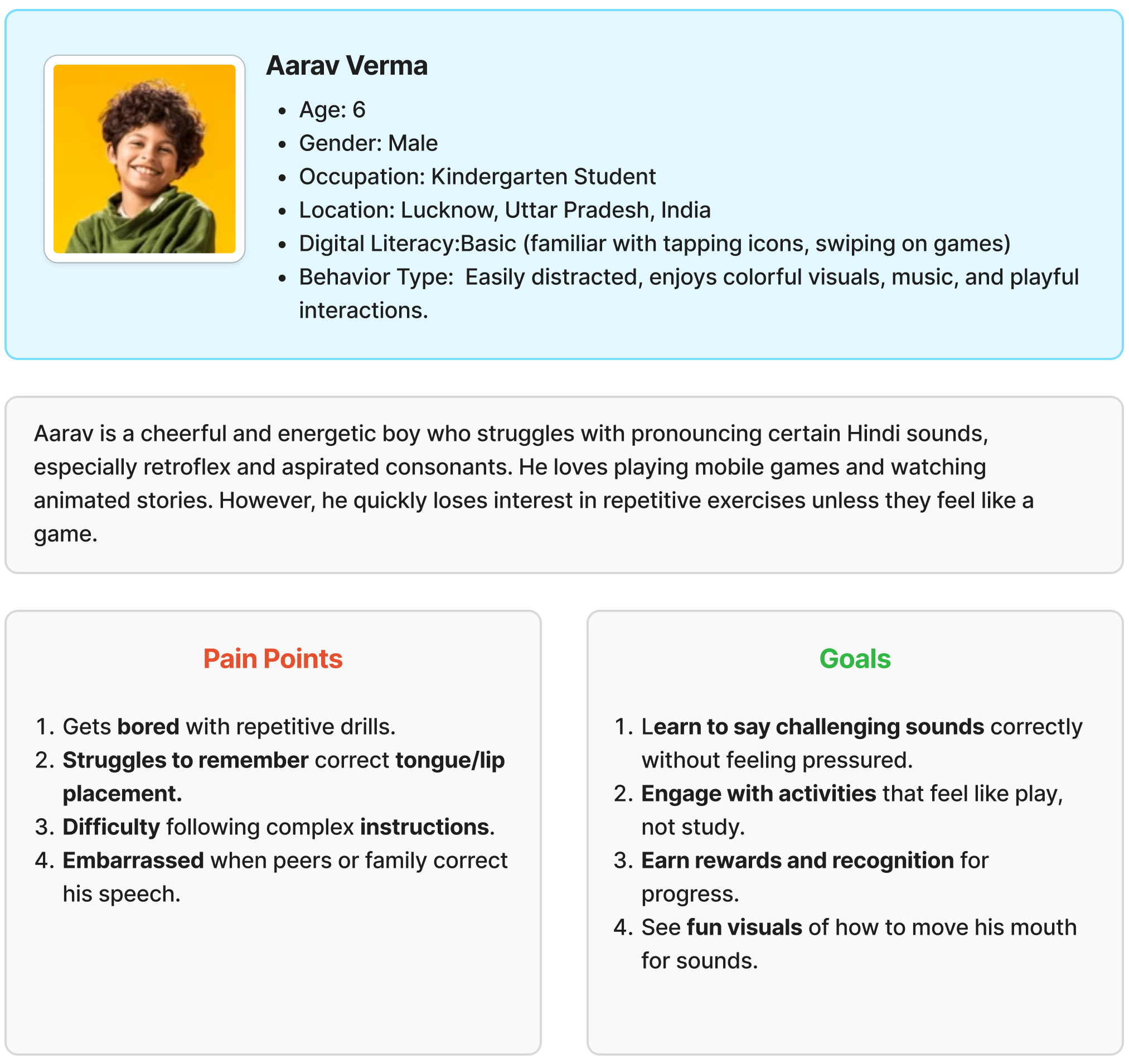
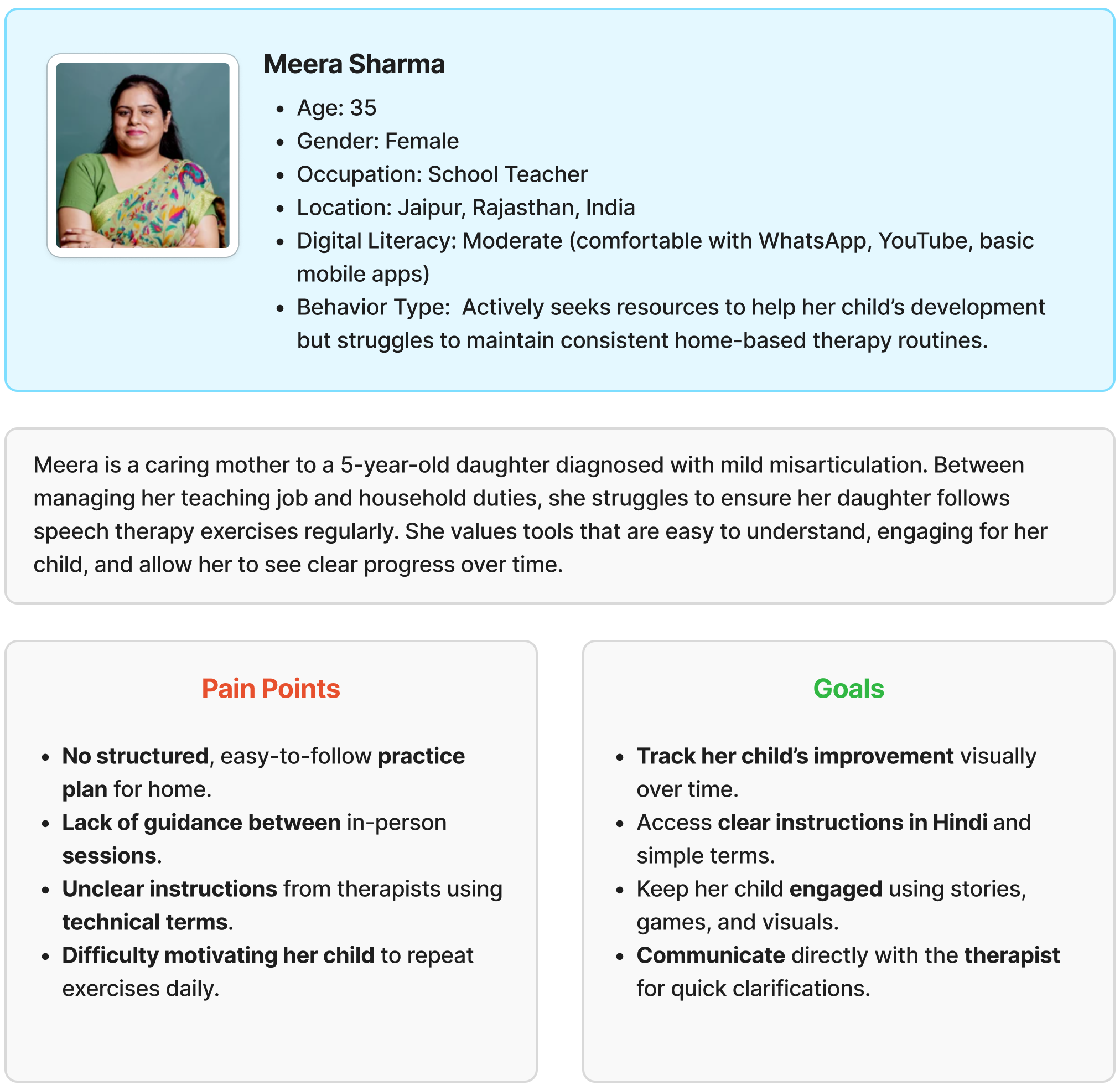
User Personas
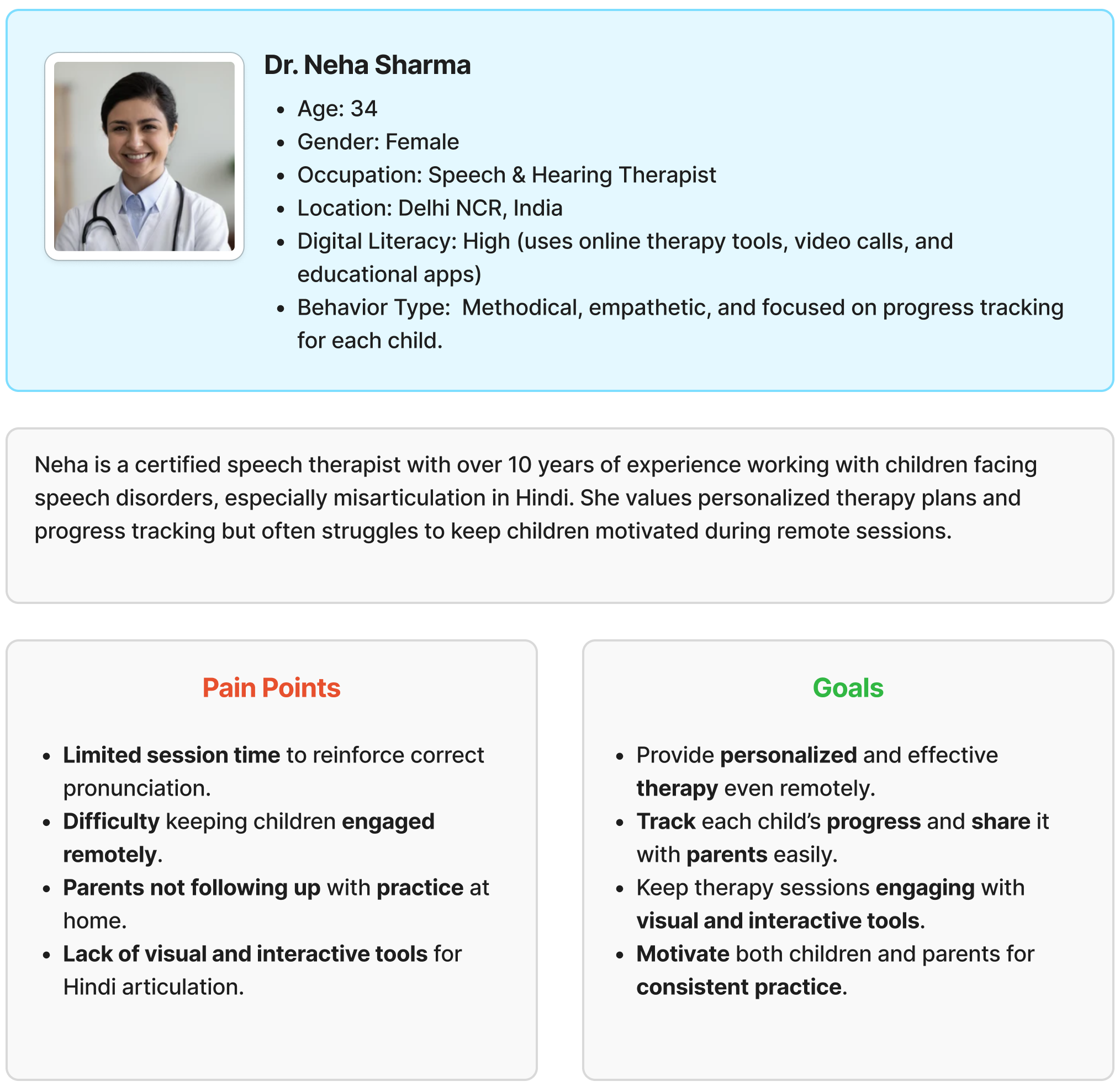
Empathy Map
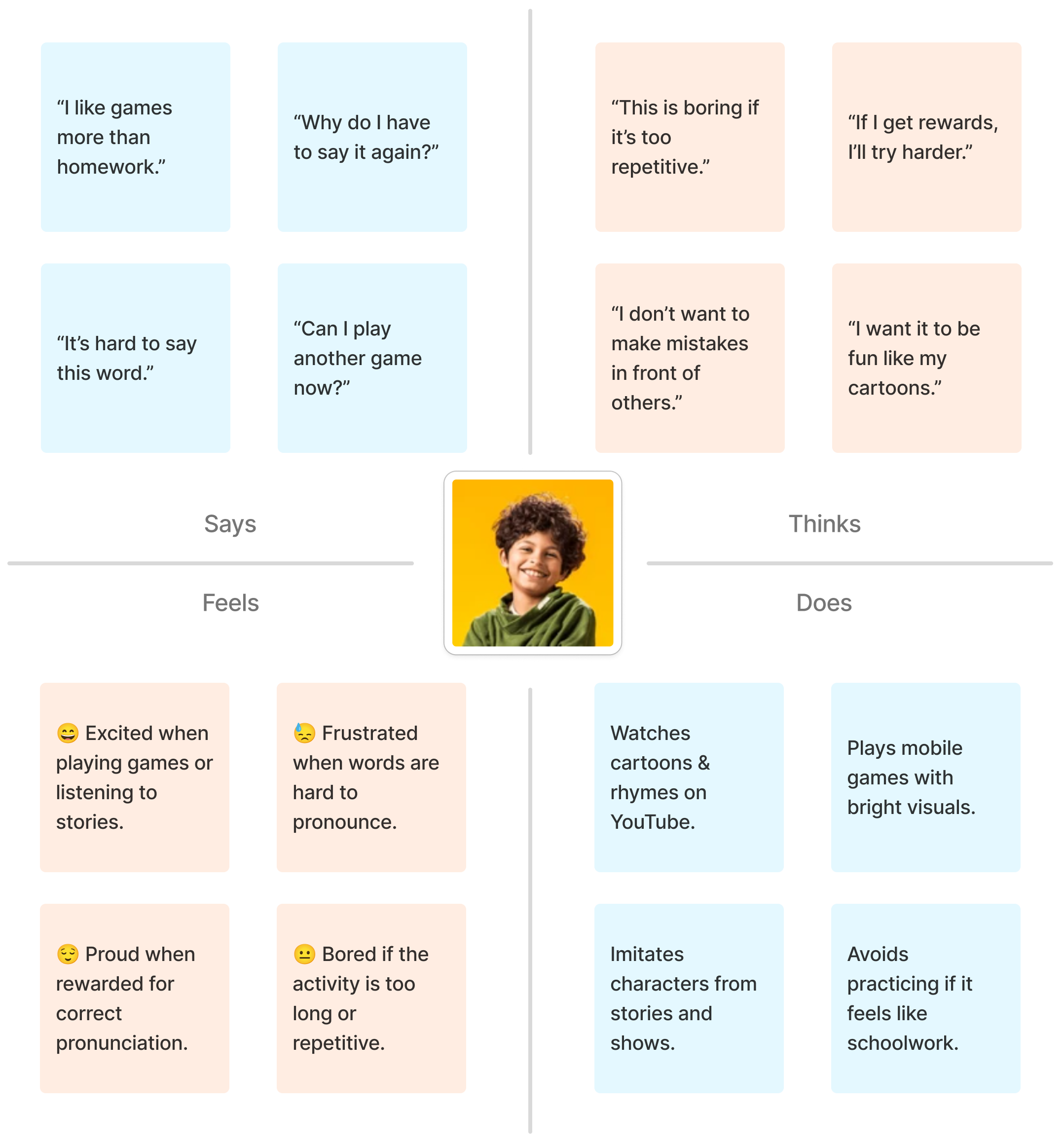
Empathize → Define → Ideate
Translating Insights into Action
With clear needs from children, parents, and therapists, the challenge was to design an experience that was fun for the child, informative for the parent, and empowering for the therapist, all while being culturally relevant for Hindi speech therapy.
Mind Mapping the Solution Space
A mind map was created to visualize the problem space, explore potential solutions, and identify overlapping needs across users. This helped in structuring the feature set into clear, actionable modules.
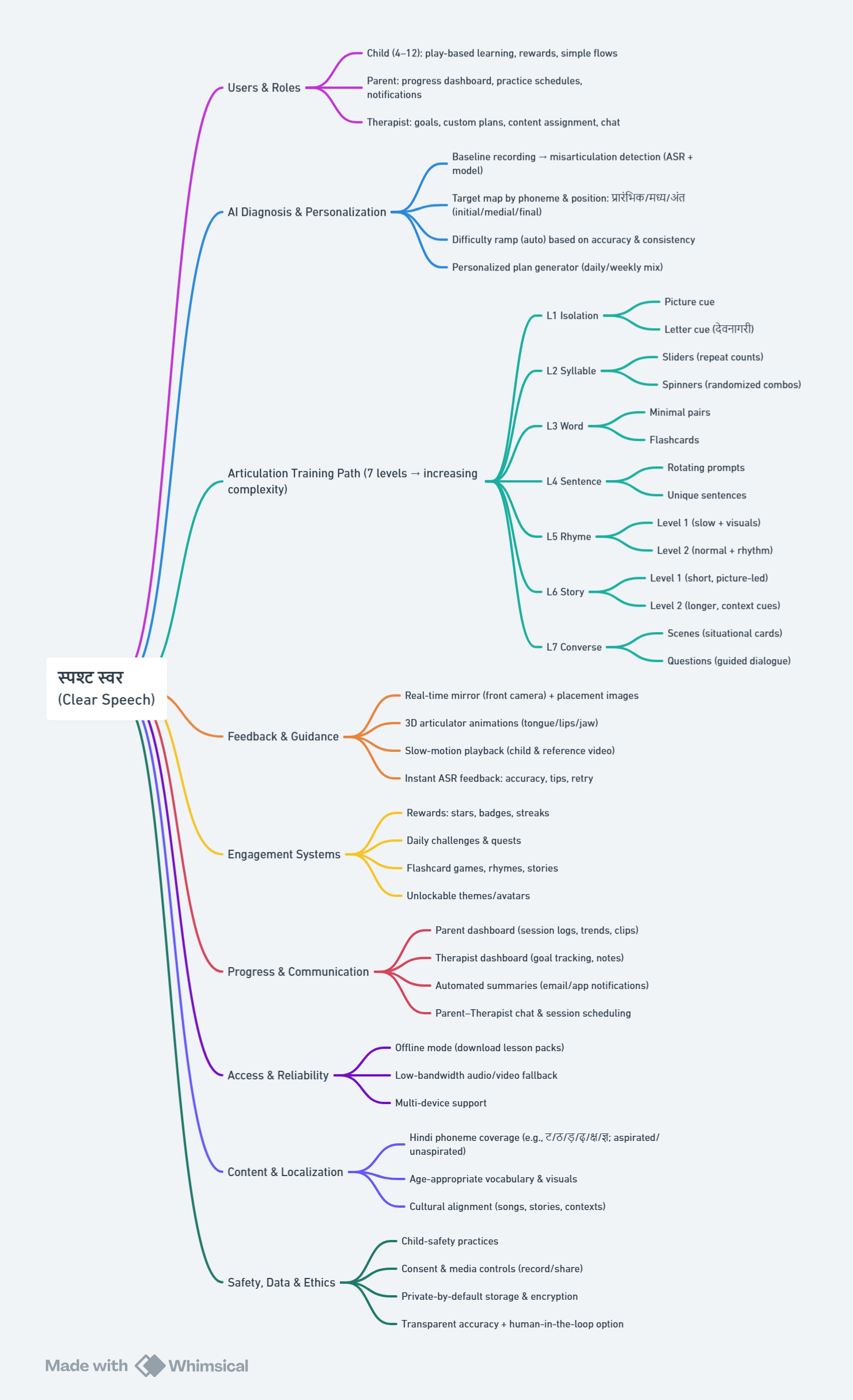
Feature Definition
From the mind map, we refined the core set of features:
- AI Diagnosis
Detects misarticulated sounds and assigns targeted syllables.
- Structured Therapy Plan
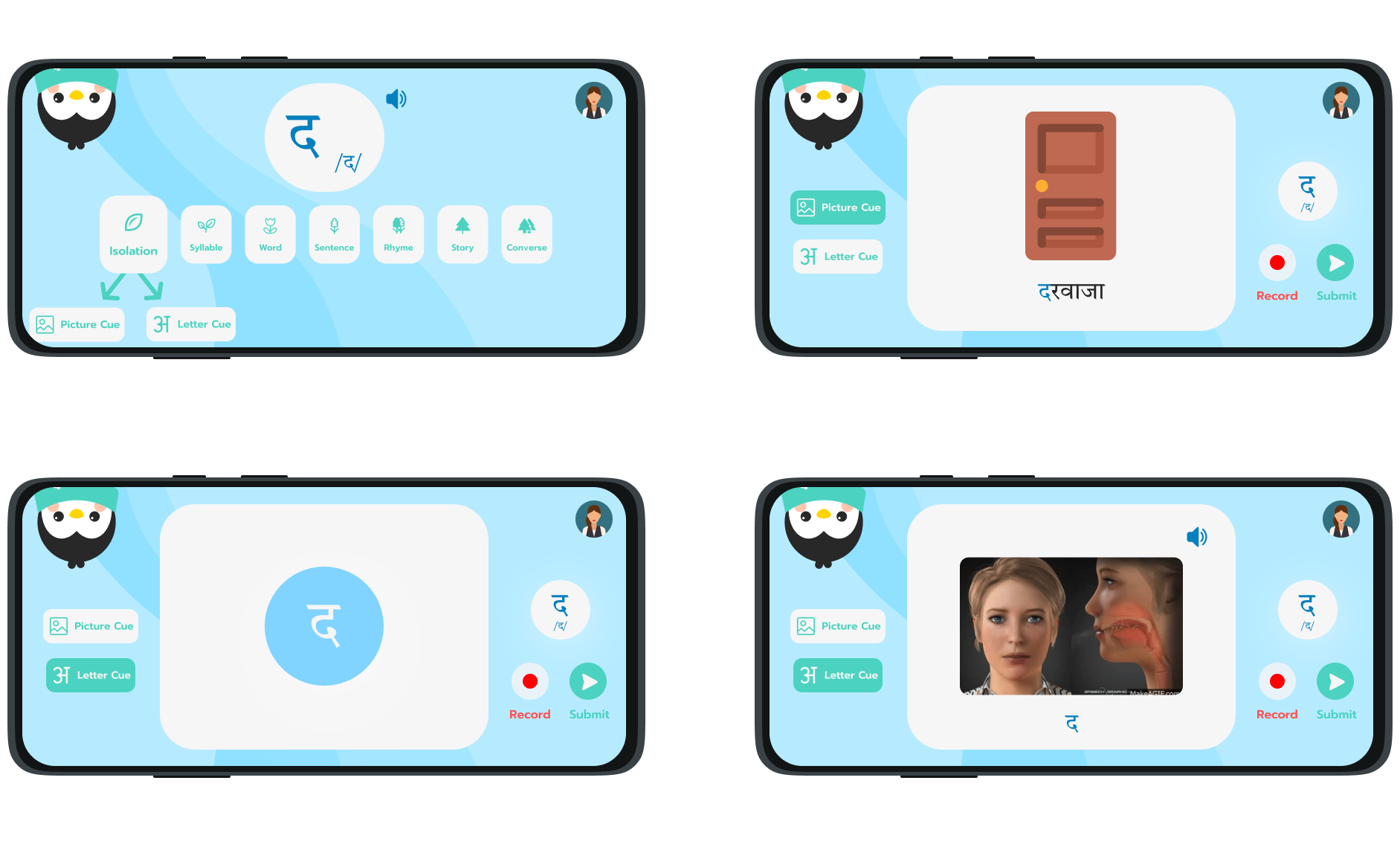
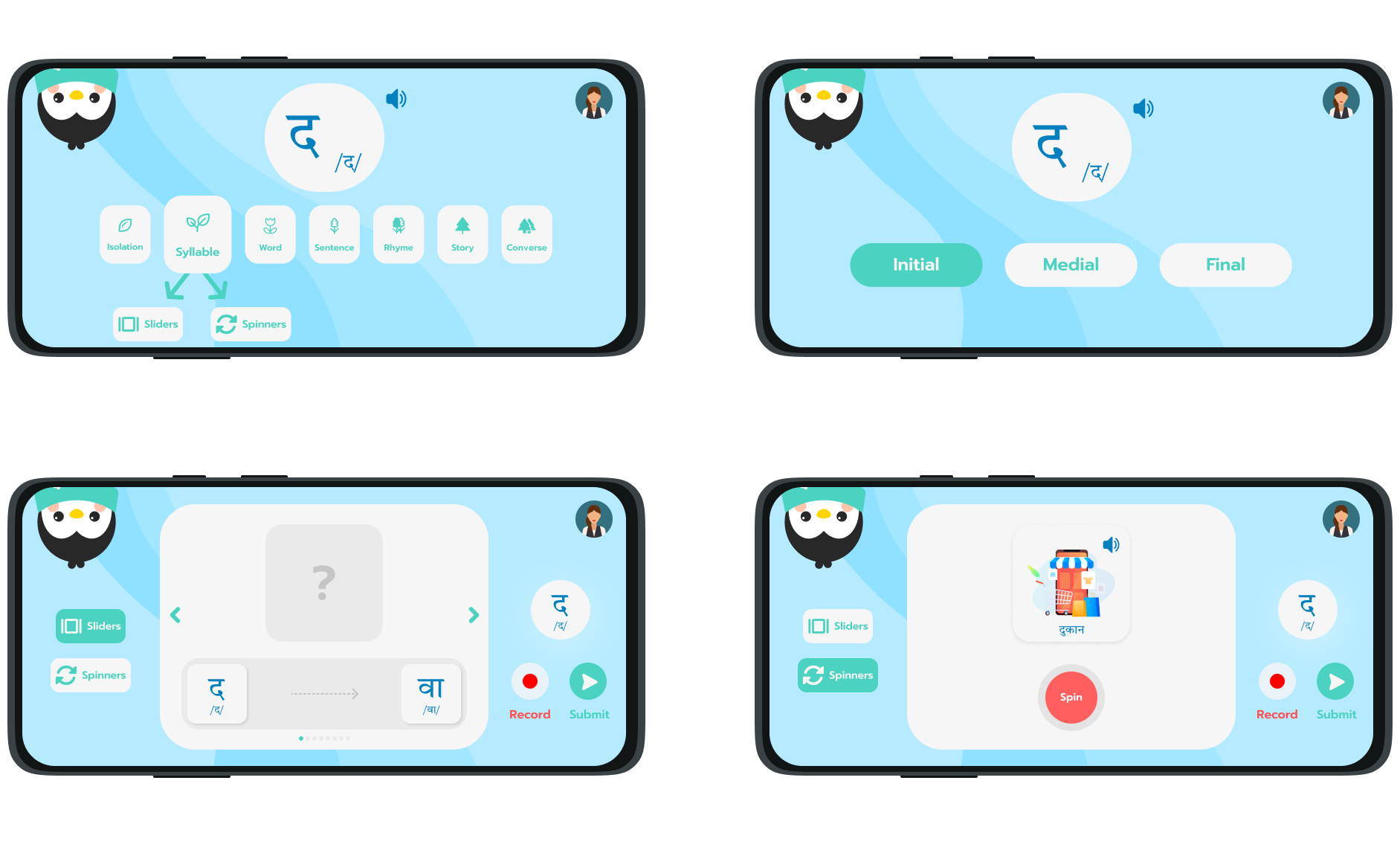
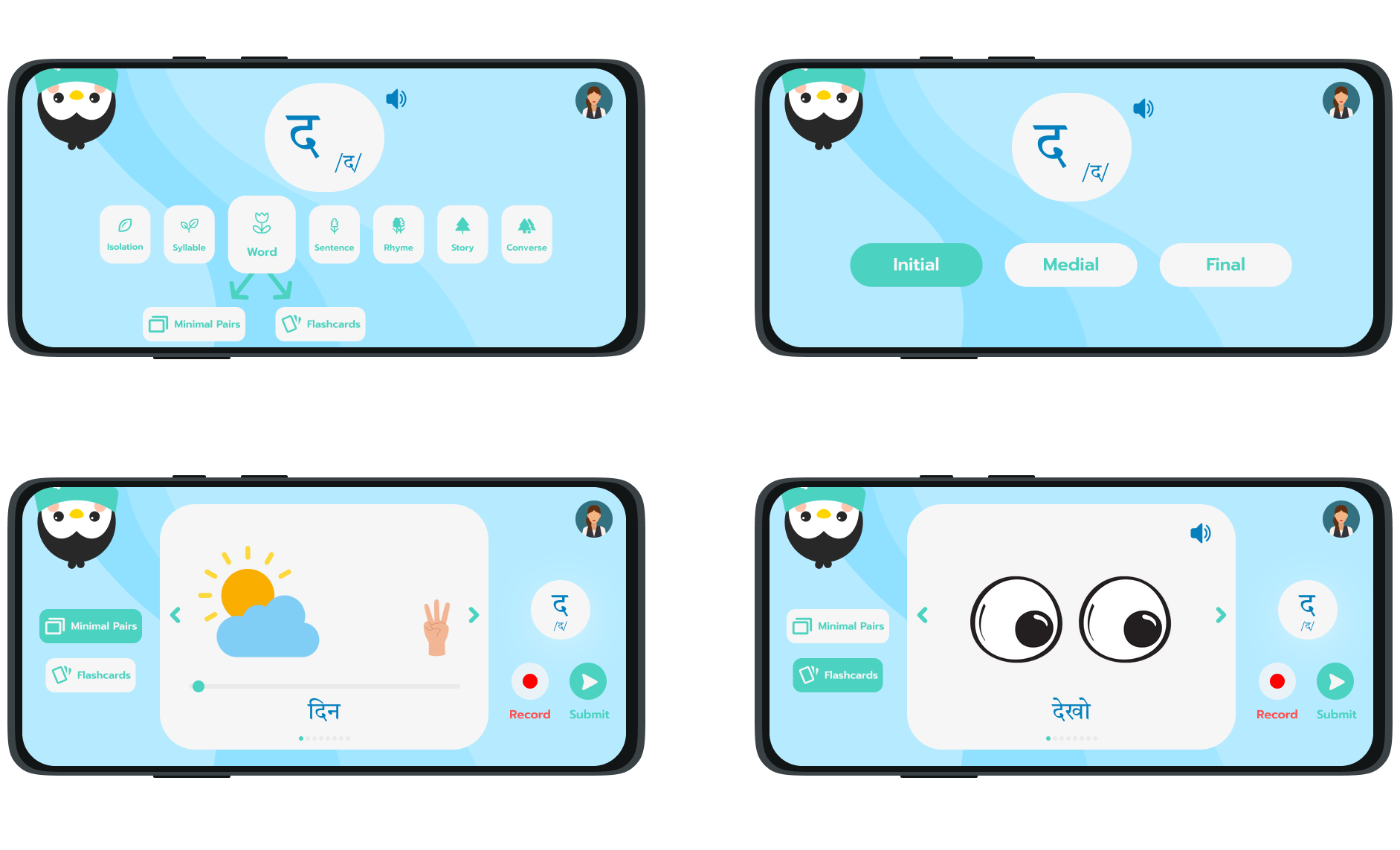
Isolation → Syllable → Word → Sentence → Rhyme → Story → Converse. - Gamified Practice
Rewards, flashcards, rhymes, and interactive exercises. - Guided Learning
Real-time mirror, slow-motion playback, and articulator animations. - Tracking & Communication
Dashboards for parents and therapists with automated updates. - Offline Mode
Enables use in low-connectivity areas.
Flowchart
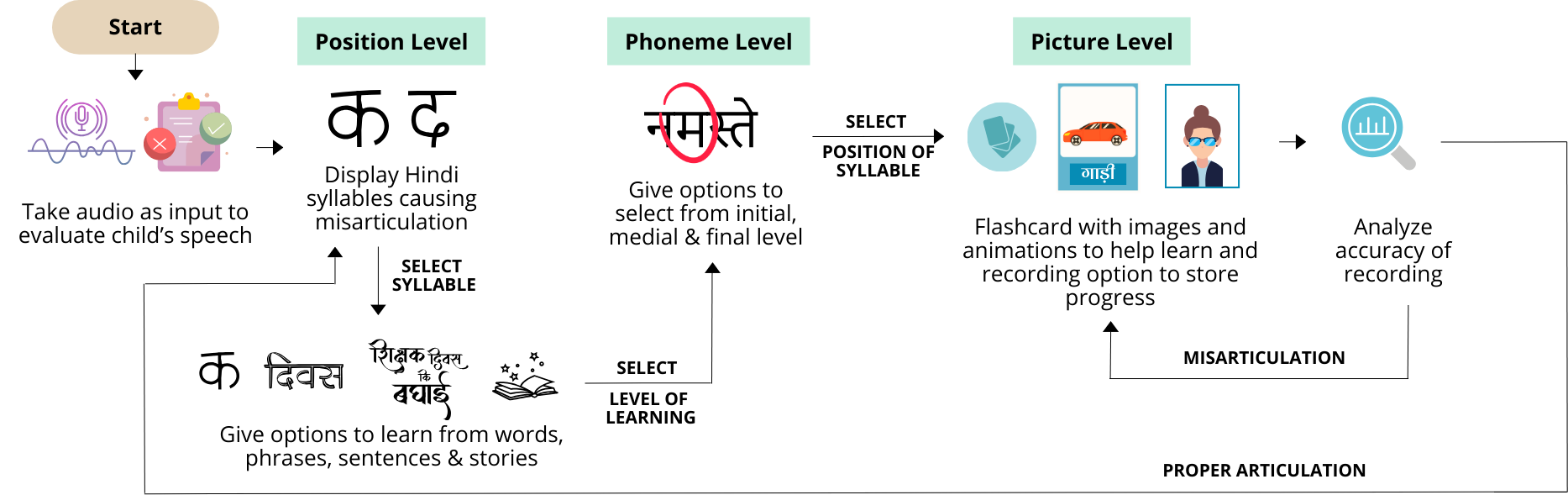
A flowchart was developed to ensure every user journey was frictionless:
- Child
Diagnosis → Personalized plan → Daily practice → Rewards → Progress. - Parent
Onboard → View progress → Set reminders → Receive notifications. - Therapist
View diagnosis → Assign goals → Monitor progress → Adjust plan.
Prioritizing What Matters Most
We applied the MoSCoW method to keep scope realistic:
- Must-have: Core therapy progression, AI diagnosis, gamification.
- Should-have: Dashboards, offline mode.
- Could-have: Advanced 3D animations, extended content library.
- Won’t-have (yet): Multiplayer games, large-scale content expansion.
By focusing on the essentials first, we ensured the design would remain impactful, testable, and feasible within constraints.
Empathize → Define → Ideate → Prototype
High-fidelity Prototypes
Onboarding
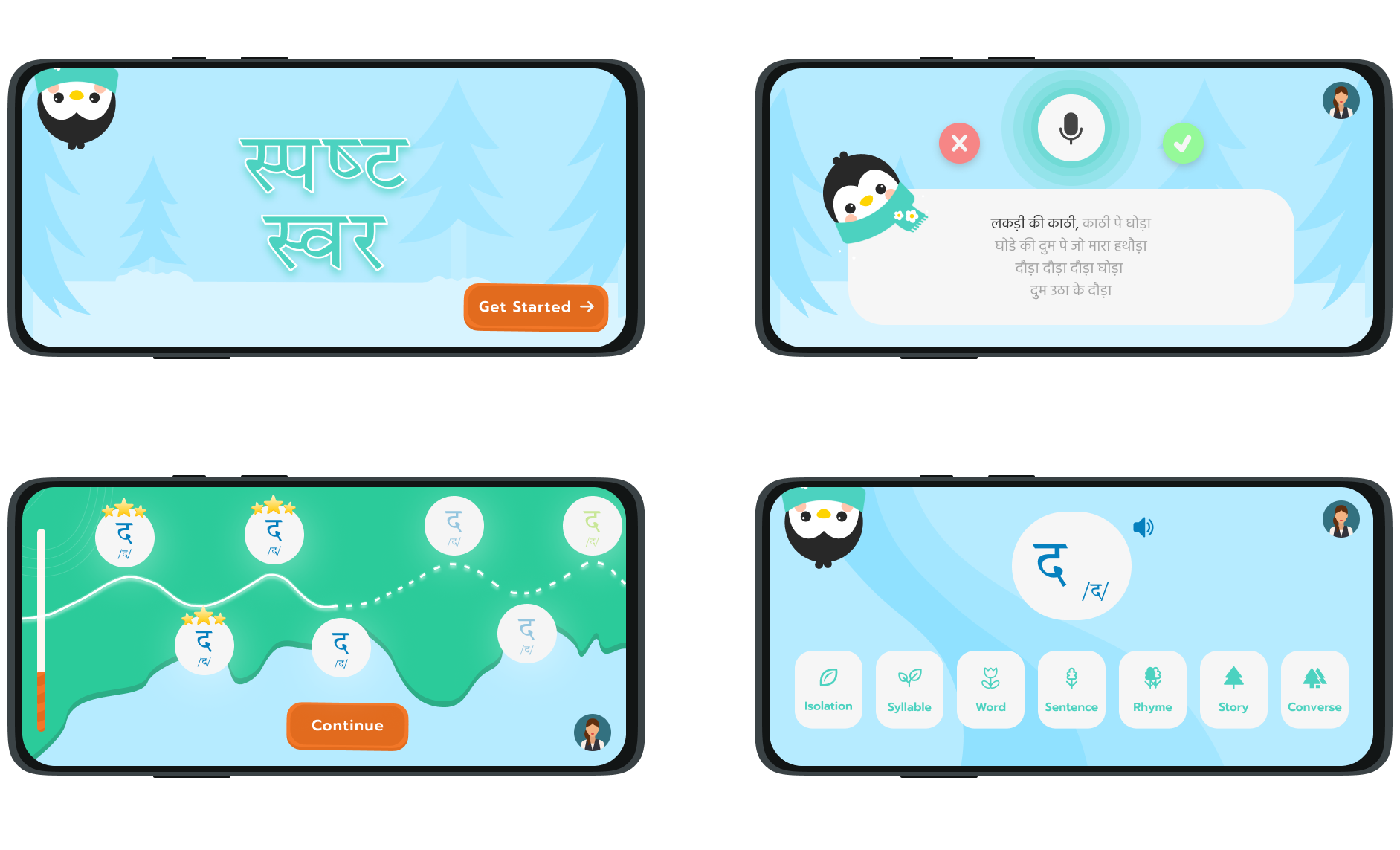
Excercises
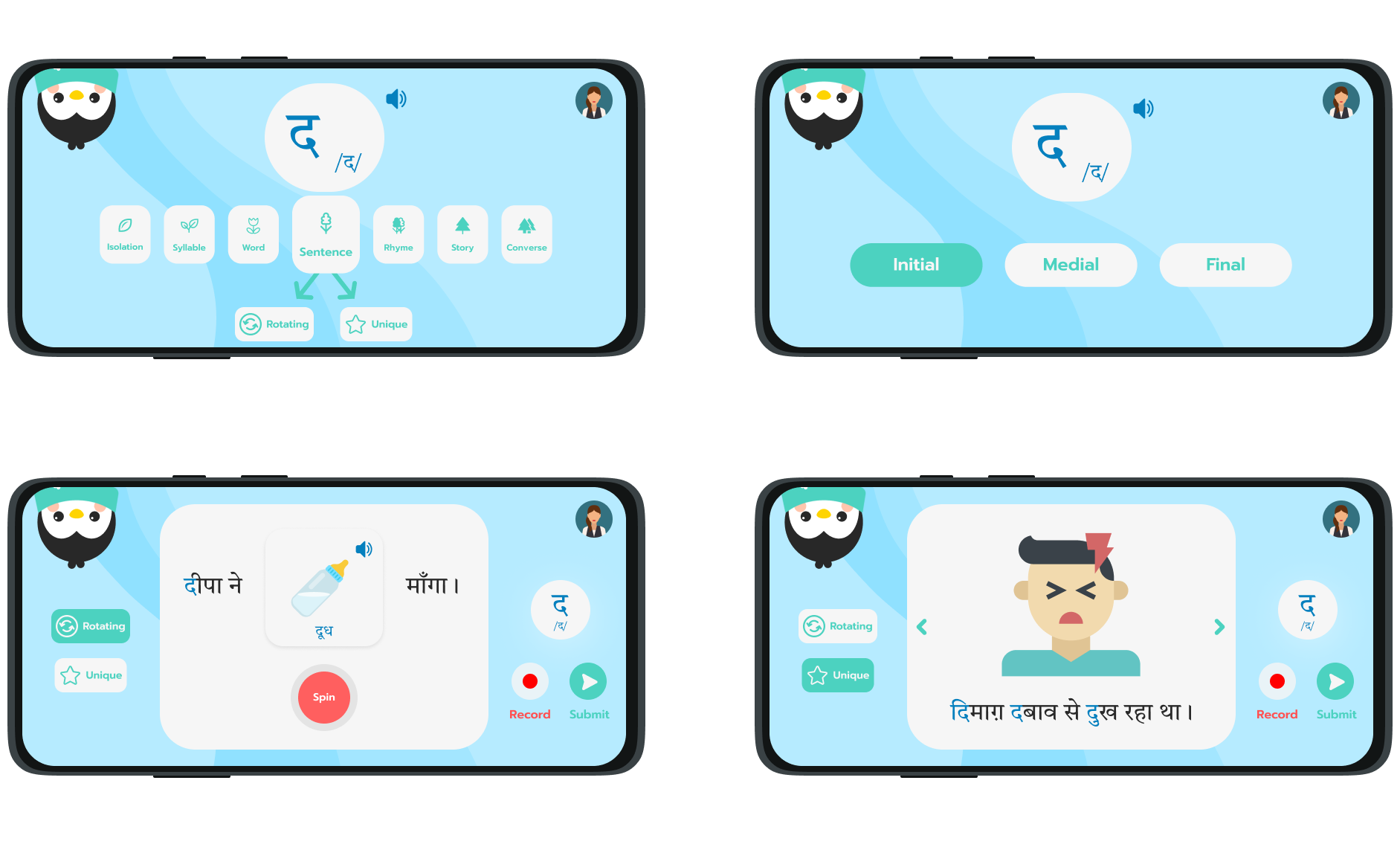
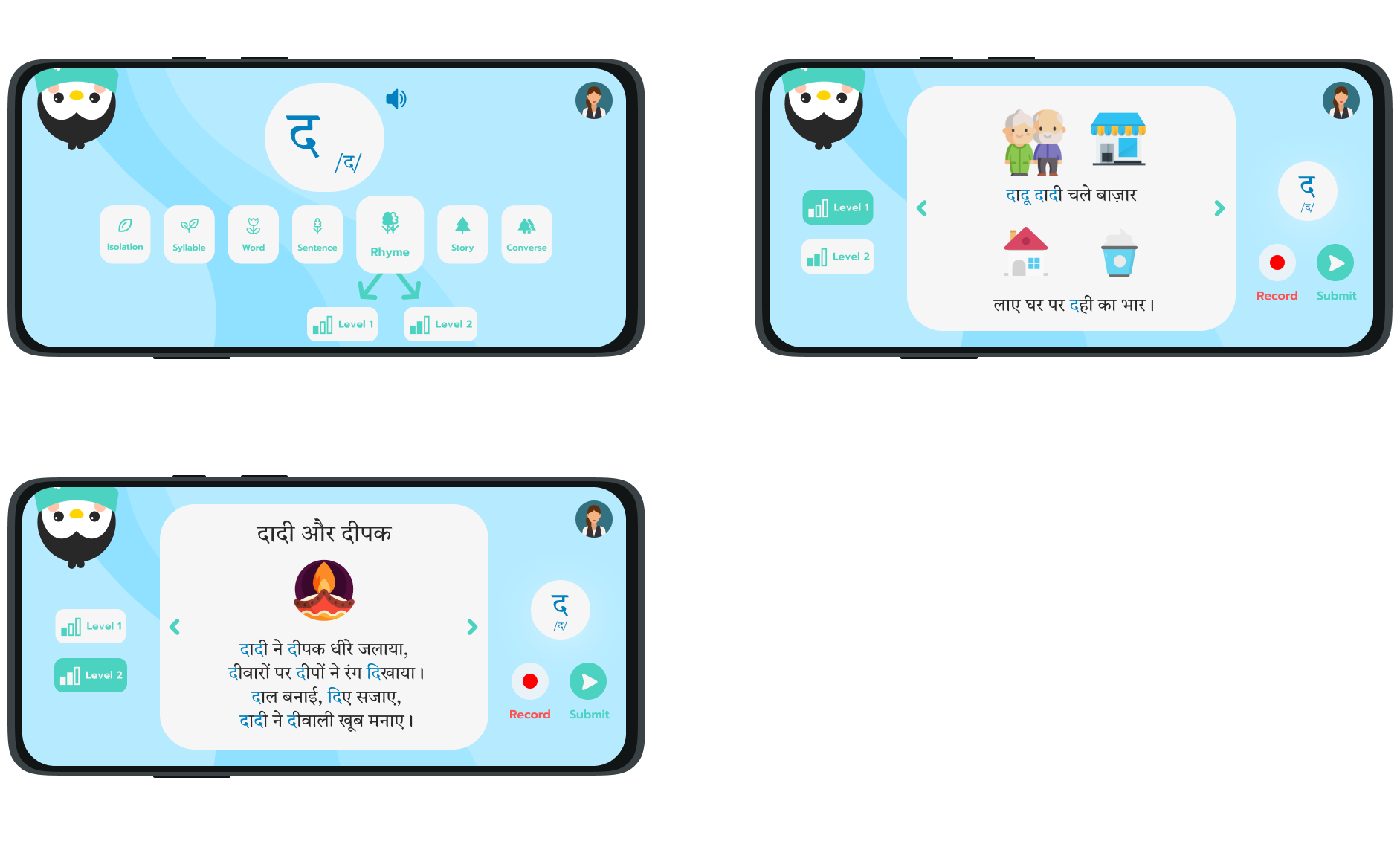
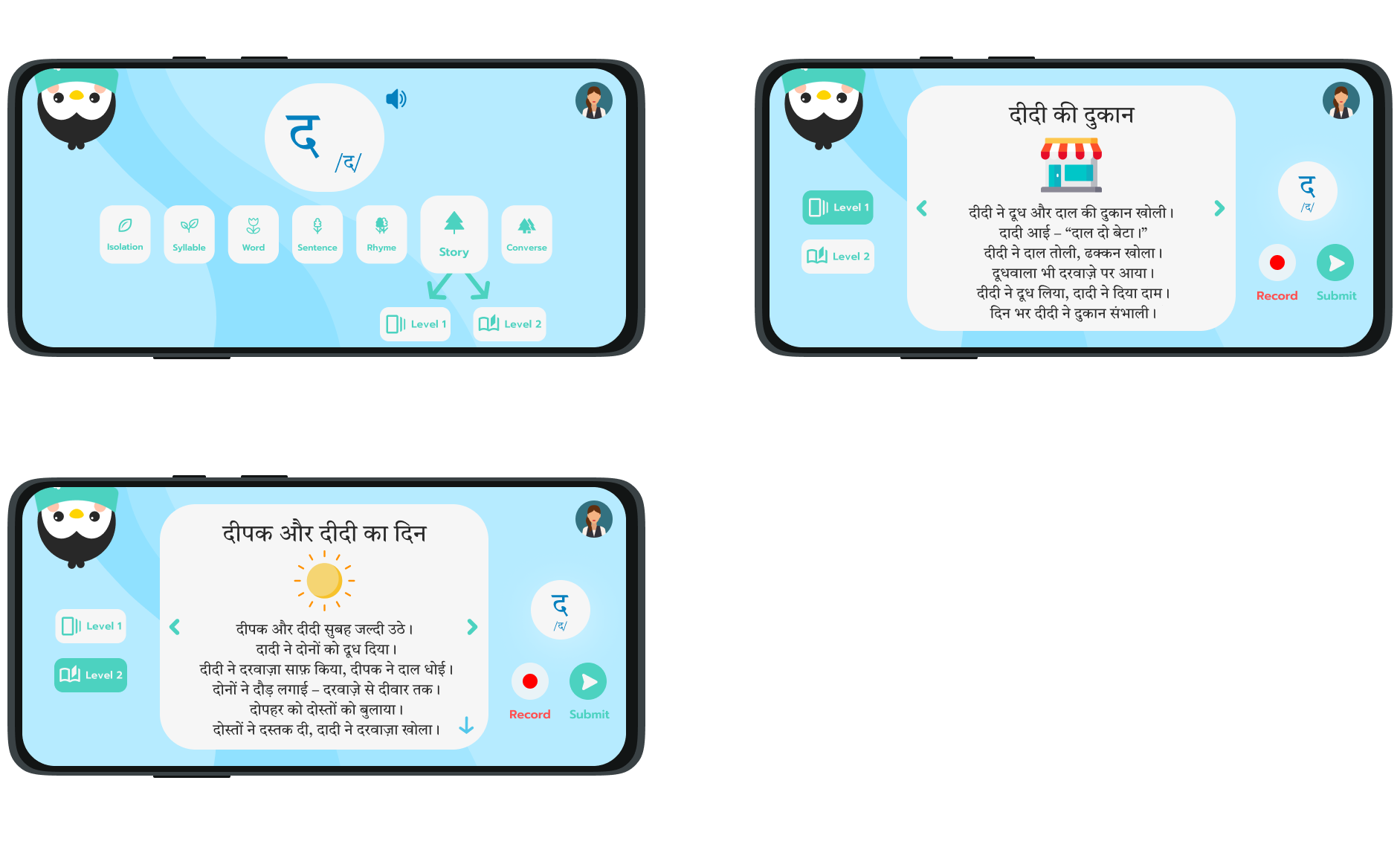
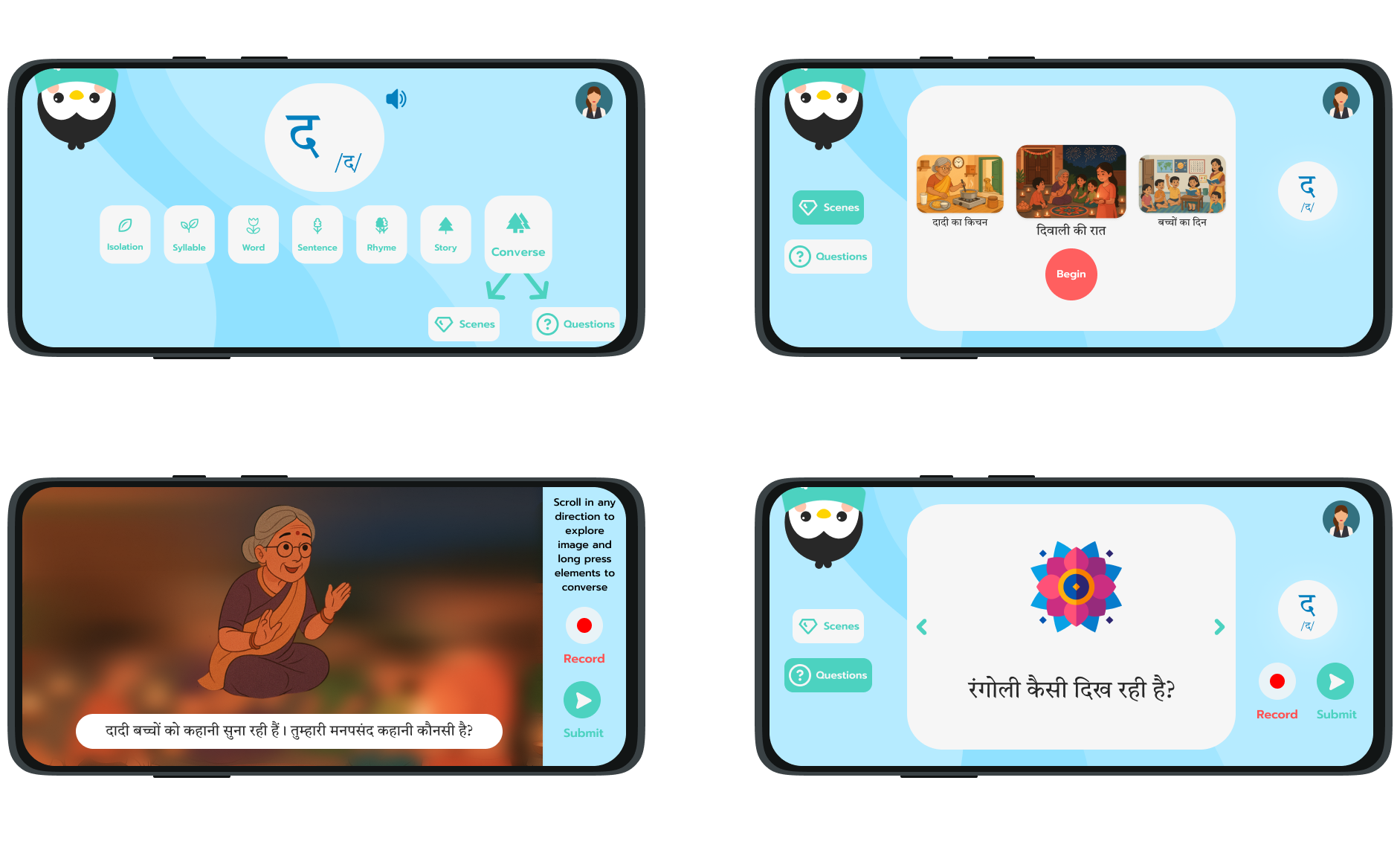
Empathize → Define → Ideate → Prototype → Test
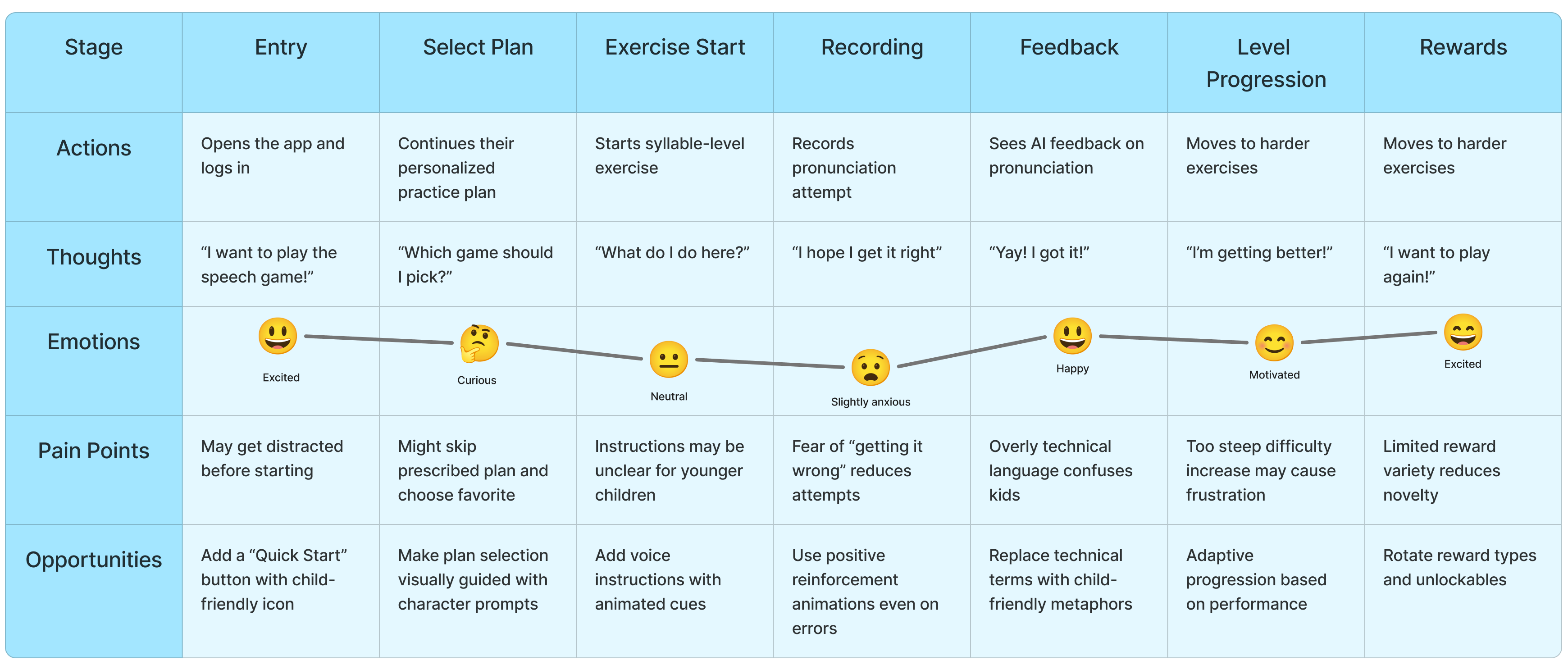
We combined observational feedback, think-aloud sessions, and post-test interviews to capture both functional and emotional responses in the usability testing.
User Journey Map
Time to reflect!
Spasht Swar taught me how critical it is to design for culture, context, and multiple stakeholders.
I learned to:
- Localize therapy content to Hindi’s phonetic complexity and children’s learning styles.
- Balance engagement for children with tracking tools for parents and clinical precision for therapists.
- Use gamification purposefully, ensuring it drives therapy goals rather than distracting from them.
- Build for accessibility with offline use and minimal text for low-resource settings.
The project proved how design thinking can create inclusive, engaging, and scalable speech therapy solutions for India.